
The fly lifecycle & how we broke it
How to Stop Trash Can Flies: Understanding the Fly Lifecycle and How FlyBye Interrupts It
If you have ever opened your outdoor garbage bin and found buzzing flies, foul odors, or even maggots, you are not alone. Every warm season, homeowners search for answers to problems like trash can flies, trash can maggots, and how to get rid of flies in garbage bins.
The key to stopping the infestation is not just killing the flies you can see. The real solution is to interrupt the fly lifecycle before it keeps repeating.
The Fly Lifecycle: Why Trash Can Fly Problems Escalate So Quickly
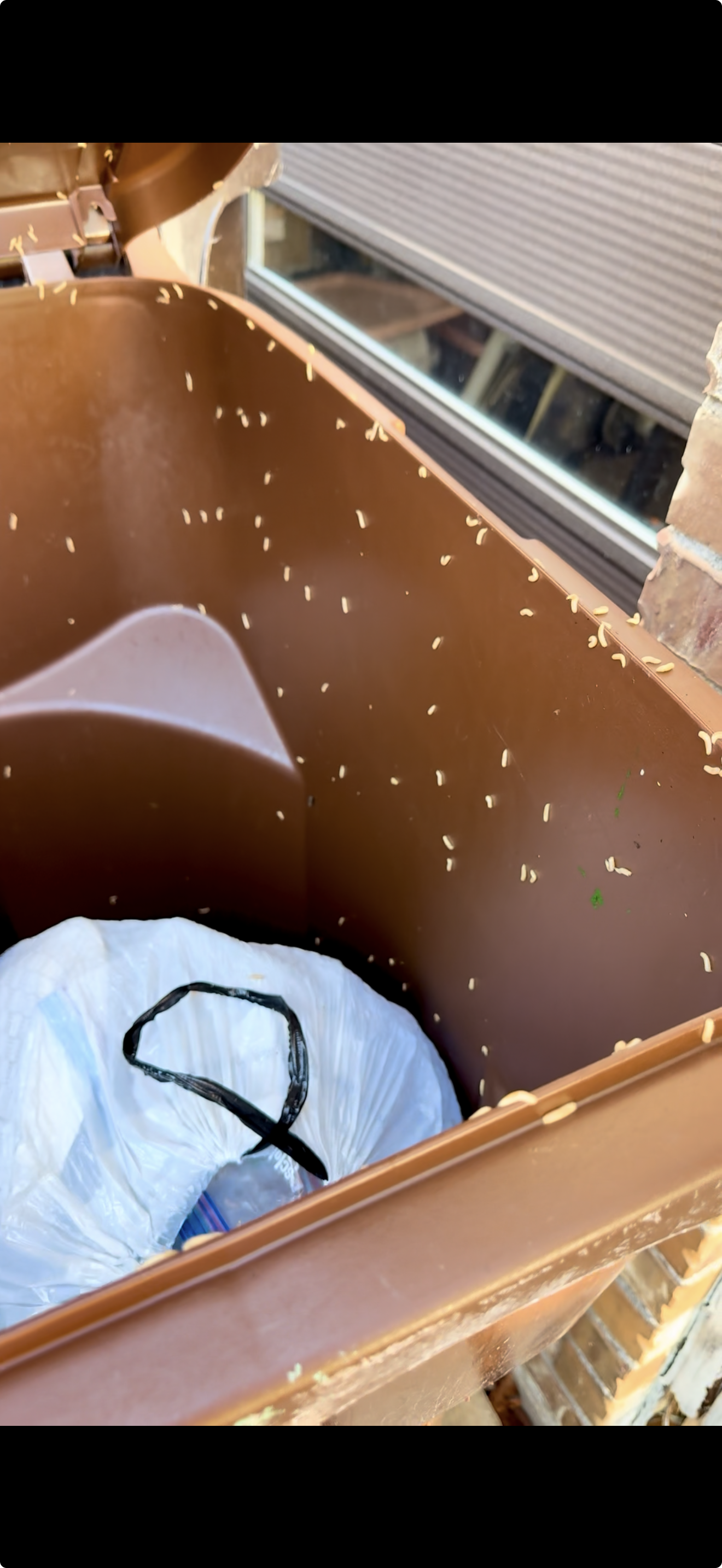
Flies reproduce fast, especially in warm, humid conditions. Your trash can gives them exactly what they want: food, moisture, shelter, and heat.
1. Egg Stage
Adult flies land on rotting food, organic waste, and garbage residue. They lay eggs in these moist areas, often along the walls, corners, or contents of a trash can. Fly eggs can hatch in as little as 8 to 24 hours.
2. Larva Stage (Maggots)
Once the eggs hatch, maggots begin feeding immediately. This is the stage people notice when they search for maggots in trash can or how to prevent maggots in garbage. At this point, the infestation is already active.
3. Pupa Stage
After feeding for several days, maggots move into the pupal stage. They begin transforming into adult flies, often hidden in dry corners or protected spaces near the trash.
4. Adult Fly Stage
New adult flies emerge and begin reproducing again. In warm weather, the full lifecycle can happen in as little as 7 to 10 days, which is why a minor problem can become a major infestation so quickly.
Why Outdoor Trash Cans Attract Flies

Outdoor garbage bins are one of the most attractive breeding grounds for flies because they offer:
- Food waste that attracts adult flies
- Moisture that supports egg and larva development
- Heat that speeds up the fly lifecycle
- Enclosed, protected space where eggs and maggots can survive
This is exactly why people experience recurring issues with flies in outdoor trash bins, especially during spring and summer.
Why Most Trash Can Fly Solutions Fail
Many products only address the visible problem. They may kill some adult flies or mask odors temporarily, but they do not stop the cycle from repeating.
That means:
- Adult flies come back
- Eggs continue hatching
- Maggots continue developing
- The infestation restarts again and again
How FlyBye Interrupts the Fly Lifecycle

FlyBye is designed to help break the infestation cycle at its most important point: before it keeps multiplying.
FlyBye Helps Repel Flies from Landing and Laying Eggs
Flies rely heavily on scent and environmental cues when choosing where to land and reproduce. FlyBye helps create a less inviting environment around the trash can, helping discourage flies from settling and laying eggs on garbage surfaces.
FlyBye Helps Interrupt the Conditions That Support Infestation
Once flies begin using your bin as a breeding ground, the problem compounds fast. Regular application of FlyBye helps disrupt that cycle by targeting the trash can environment itself, rather than waiting until the infestation is severe.
FlyBye Supports Preventative Trash Can Protection
Instead of reacting after flies and maggots appear, FlyBye is best used proactively. That is what makes prevention so powerful. If eggs are never laid, maggots never develop, and adult populations never build.
How to Use FlyBye for Best Results
For ongoing protection, use FlyBye as part of your normal trash can routine:
- Spray the inside walls of the trash can
- Spray the underside of the lid
- Spray the rim, edges, and areas where residue builds up
- Reapply after trash pickup or whenever the bin becomes dirty again
This preventative approach is especially helpful during hot weather, when flies reproduce faster and trash can infestations become more common.
Final Takeaway: Prevention Is the Real Fly Control Strategy
If you are dealing with flies in your trash can, maggots in your garbage bin, or recurring bin infestations every summer, the answer is not just killing the flies you can see.
The real answer is interrupting the lifecycle.
Stop the Fly Cycle Before It Starts
Keep your outdoor trash bin cleaner, less attractive to flies, and better protected during peak fly season.
Shop FlyByeFrequently Asked Questions
Why are flies always around my outdoor trash can?
Flies are attracted to food residue, moisture, warmth, and organic waste. Outdoor garbage bins provide ideal conditions for feeding and egg-laying.
How do maggots get in a trash can?
Maggots come from fly eggs. Adult flies land on garbage and lay eggs, which can hatch very quickly in warm conditions.
How fast do flies reproduce in garbage bins?
In warm weather, the lifecycle from egg to adult fly can happen in as little as 7 to 10 days.
What is the best way to prevent trash can flies?
Prevention works best. Keeping the trash can clean and using a preventative spray like FlyBye regularly can help discourage flies from landing and laying eggs.
Can stopping egg-laying help prevent maggots?
Yes. If flies do not lay eggs in the trash can, maggots do not develop there.
Primary SEO targets built into this article: trash can flies, trash can maggots, flies in outdoor trash bins, maggots in trash can, how to get rid of flies in garbage bins, how to prevent maggots in garbage.
